Medallions reduced by up to €50!
All lockets CHEAPER ✨
Wear your most beautiful memories close to you.
Opening keepsakes of people, animals and your loved ones.
X Close
X Close
Oxidation in jewelry refers to a chemical reaction between metal and oxygen in the air, often in combination with moisture and other environmental influences. This forms a patina or discoloration on the surface, making the metal appear darker or duller.
Note: In our shop, you will only find high-quality precious metals. Nevertheless, without coating, oxidation can occur depending on skin type and environment!
An anti-oxidation coating is a special protective layer applied to jewelry to prevent or slow down the natural oxidation and tarnishing of the metal. These coatings act as a barrier against oxygen, moisture, and other environmental influences that lead to chemical reactions and discoloration.
✅ Prevents tarnishing and discoloration of jewelry.
✅ Extends the lifespan and shine of the metal.
✅ Reduces skin reactions (e.g., green discoloration from copper alloys).
✅ Saves cleaning effort.
❌ Coating can wear off over time.
❌ Can be damaged by chemicals (e.g., perfume, sweat, cleaning agents).
❌ Some coatings change the natural look of the metal.
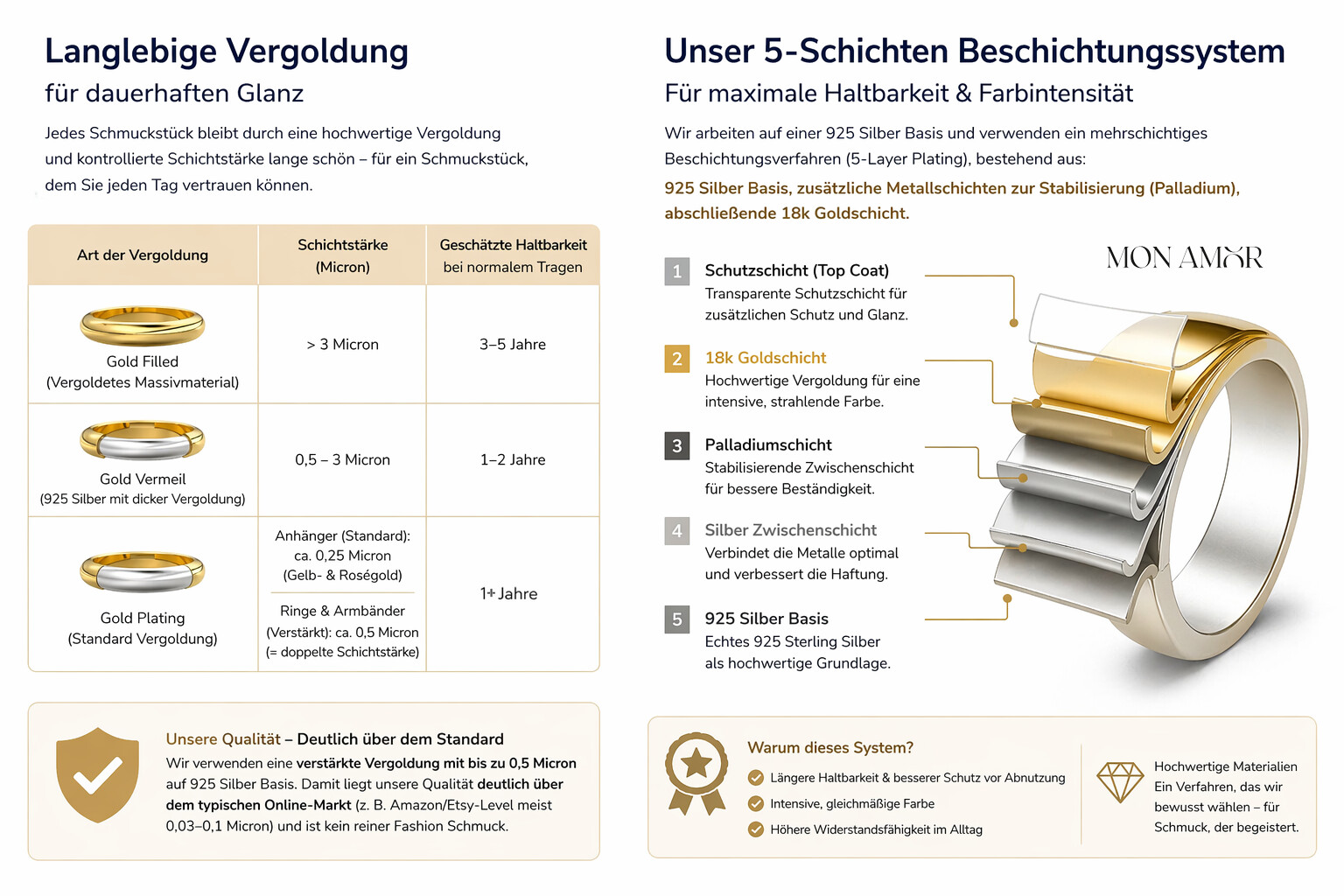
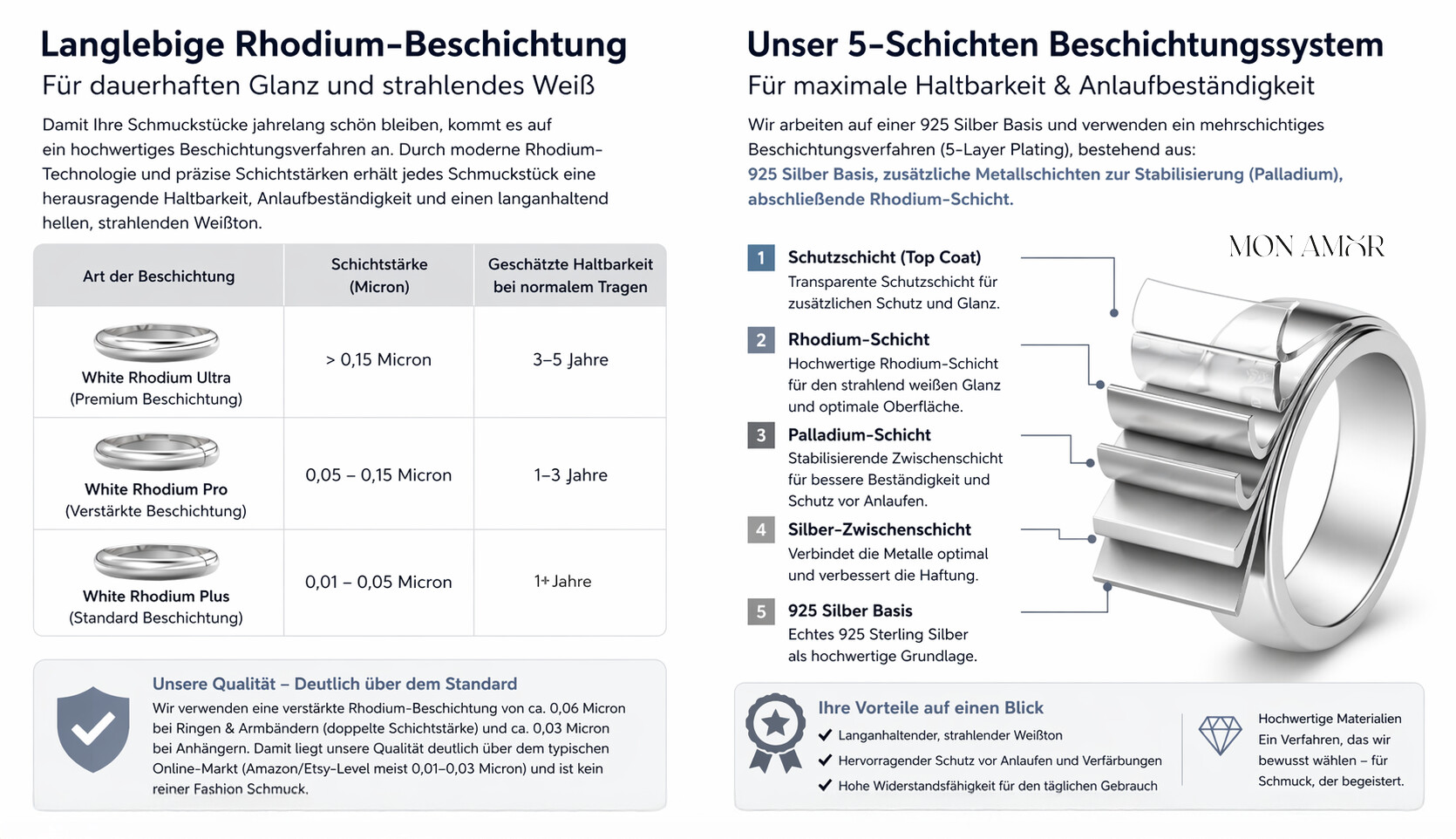
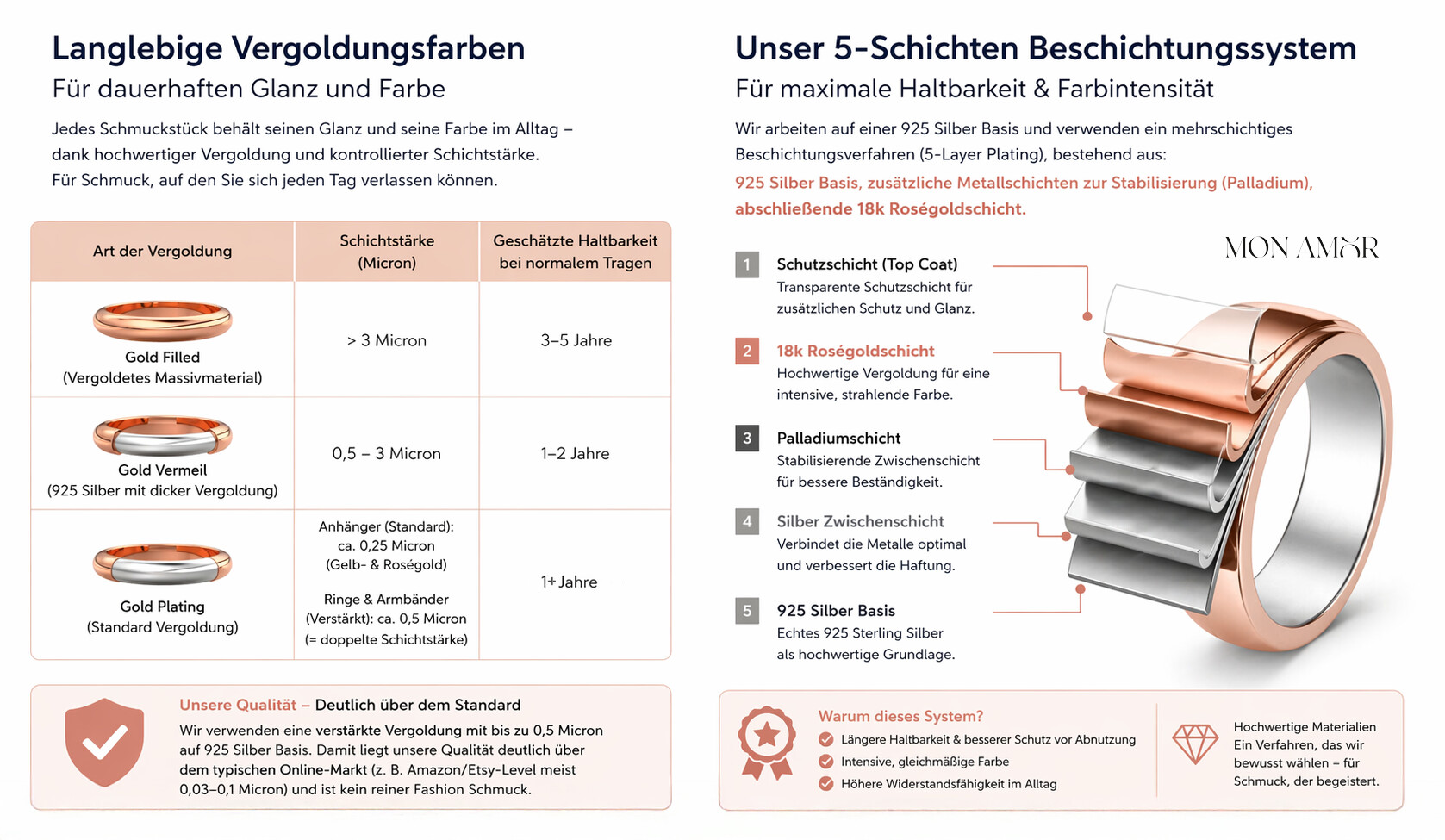
All our jewelry pieces receive the best finishing through proper processing and optional extra coating:
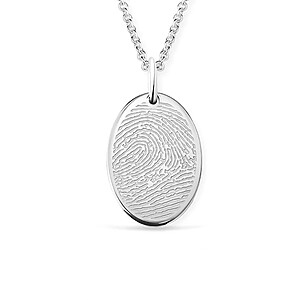
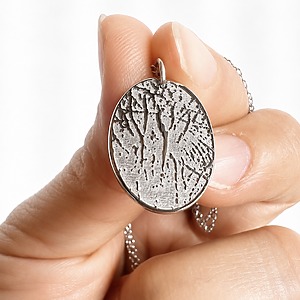
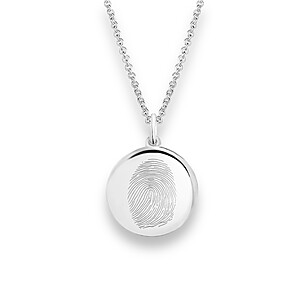
KEEPSAKE - Necklace with original fingerprint engraving memorial jewelry
 925 rhodium-plated silver
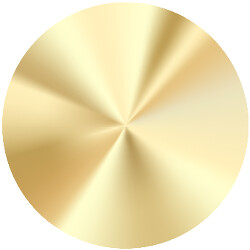 Gold plated 18K
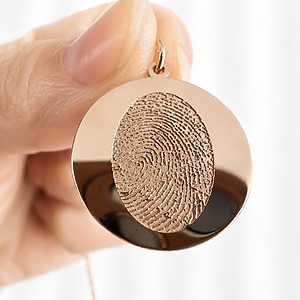
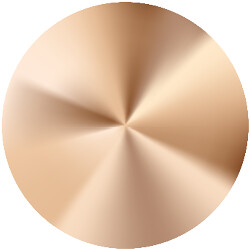 Rose gold
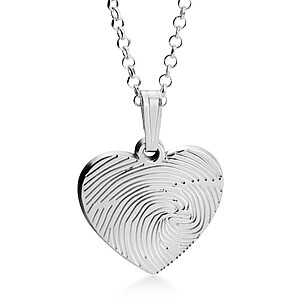
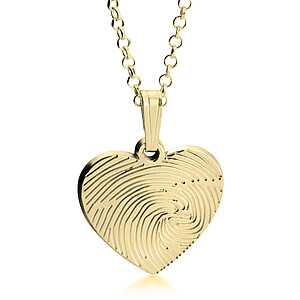
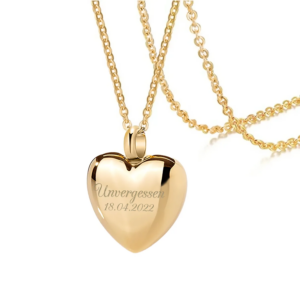
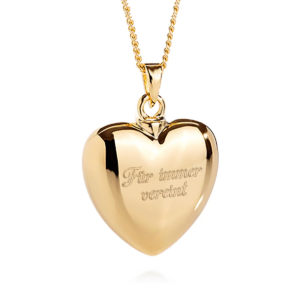
HEART LEAF - Heart necklace with original 3D fingerprint engraving
925 rhodium-plated silver
Gold plated 18K
Rose gold
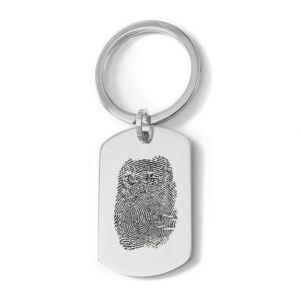
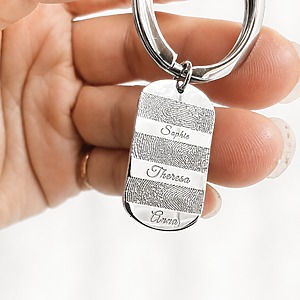
LUCKY CHARM - Keychain with individual 3D fingerprint & optional name
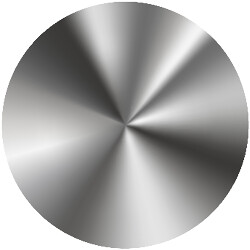 Stainless steel 304
925 rhodium-plated silver
Gold plated 18K
Rose gold
Stainless steel 304
925 rhodium-plated silver
Gold plated 18K
Rose gold
Stainless steel 304
925 rhodium-plated silver
Gold plated 18K
Rose gold
Stainless steel 304
925 rhodium-plated silver
Gold plated 18K
Rose gold
MEMENTO Fingertip - Necklace with original 3D fingerprint engraving
925 rhodium-plated silver
Gold plated 18K
Rose gold
925 rhodium-plated silver
Gold plated 18K
Rose gold
Sprache auswählen: